Discover five expert strategies to maximize tool life and cut costs, keeping your CNC machines running efficiently.
Introduction
In the world of precision machining, your cutting tools are your greatest asset—and one of your most significant recurring expenses. Whether you are running a high-volume production line or a custom job shop, premature tool wear leads to more than just the cost of a new end mill; it leads to machine downtime, scrapped parts, and frustrated operators.
At Accura CNC Supply, we don't just want to sell you tools; we want to help you get the most out of every edge. Here are five pro-level strategies to extend your tool life and keep your spindles turning longer.
1. Master Your Speeds and Feeds (The "Goldilocks" Zone)
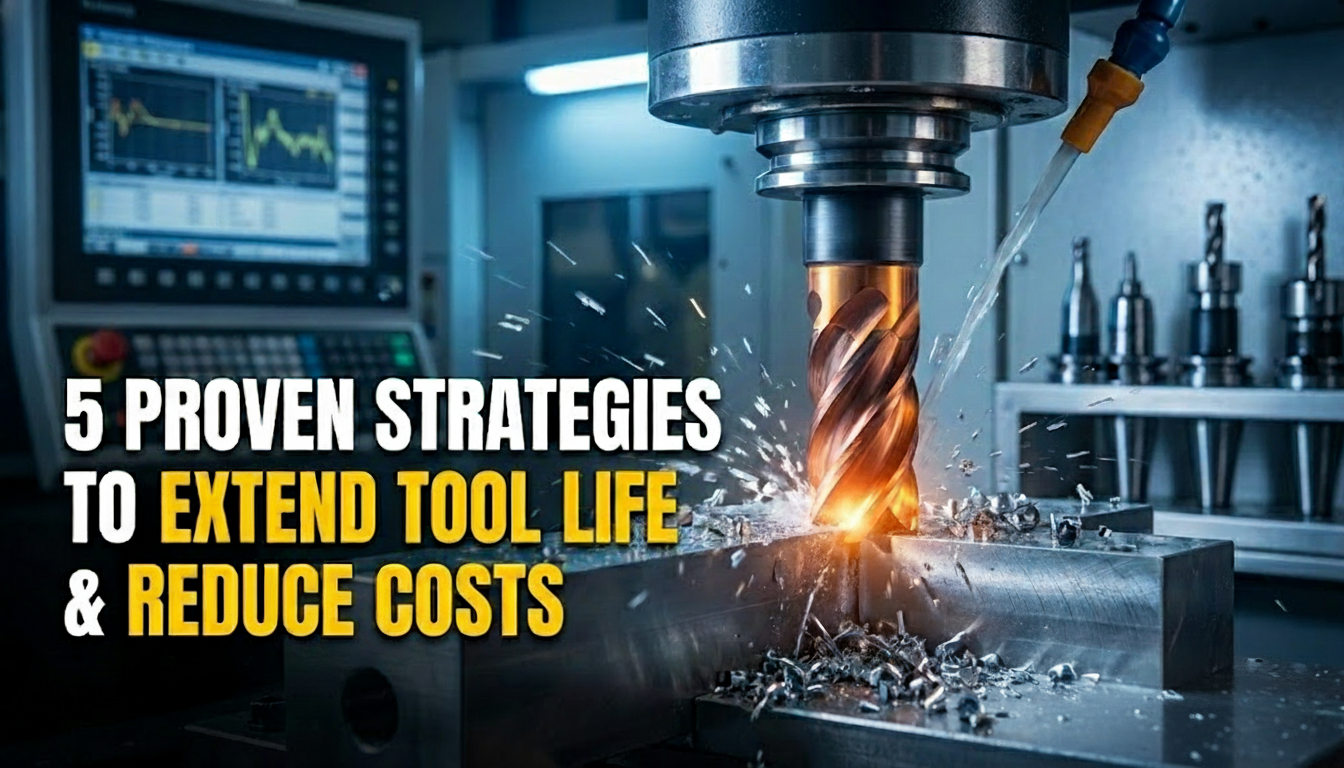
The most common cause of tool failure isn't the material—it’s the parameters. Running a tool too fast generates excessive heat, leading to plastic deformation of the cutting edge. Running it too slow causes "rubbing" rather than cutting, which work-hardens the material and dulls the tool prematurely.
- The Tip: Always consult the manufacturer’s chip load recommendations. Use a modern speeds-and-feeds calculator that accounts for Radial Chip Thinning when performing high-speed machining (HSM) toolpaths.
2. Match the Coating to the Material
Using a "general purpose" tool for everything is a recipe for rapid wear. Modern tool coatings are engineered for specific thermal and chemical reactions.
- AlTiN (Aluminum Titanium Nitride): Excellent for high-heat applications like stainless steel and titanium.
- TiCrN: Ideal for gummy materials like soft steels or aluminum where "Built-Up Edge" (BUE) is a risk.
- The Tip: If you are seeing material sticking to your flutes, your coating—or lack thereof—is likely the culprit.
3. Minimize Total Indicator Runout (TIR)
If your tool holder isn't holding the tool perfectly dead-center, one flute will do more work than the others. This uneven loading causes "micro-chipping" and causes the tool to fail long before its time.
- The Tip: Invest in high-precision ER Collets or Hydraulic Chucks from Accura CNC. Even a 0.0002” reduction in runout can increase tool life by as much as 20-30%.
4. Optimize Your Coolant Strategy
Heat is the enemy of carbide. However, inconsistent cooling is even worse. Thermal shock occurs when a tool gets hot and is then suddenly hit with cold coolant, causing micro-cracks in the carbide.
- The Tip: If you can’t achieve high-pressure through-spindle coolant, consider "Air Blast" for materials like hardened steel to clear chips without causing thermal shock. For aluminum, ensure high-volume flood coolant to keep the "gum" from sticking to the flutes.
5. Implement "Lights-Out" Tool Life Management
Don't wait for a tool to snap to change it. By the time a tool breaks, it has likely already produced several out-of-tolerance parts.
- The Tip: Use the "Tool Life Management" feature on your CNC control. Track the number of minutes or parts a tool lasts before the finish begins to degrade, then set a conservative "auto-replace" limit at 80% of that time.
The Bottom Line
Extending tool life is a science of heat management and vibration control. By refining your setup and using high-quality holders and abrasives, you can significantly impact your shop’s bottom line.
Need to upgrade your tooling cabinet? Explore our latest catalog of high-performance end mills, indexable inserts, and precision tool holders designed to withstand the most demanding cycles.
Get Started Today
Browse our equipment or contact us for a free consultation. Email [email protected] — we respond within 24 hours.
Ready to get started?
Browse our equipment inventory or get in touch with our team for expert advice on your next project.