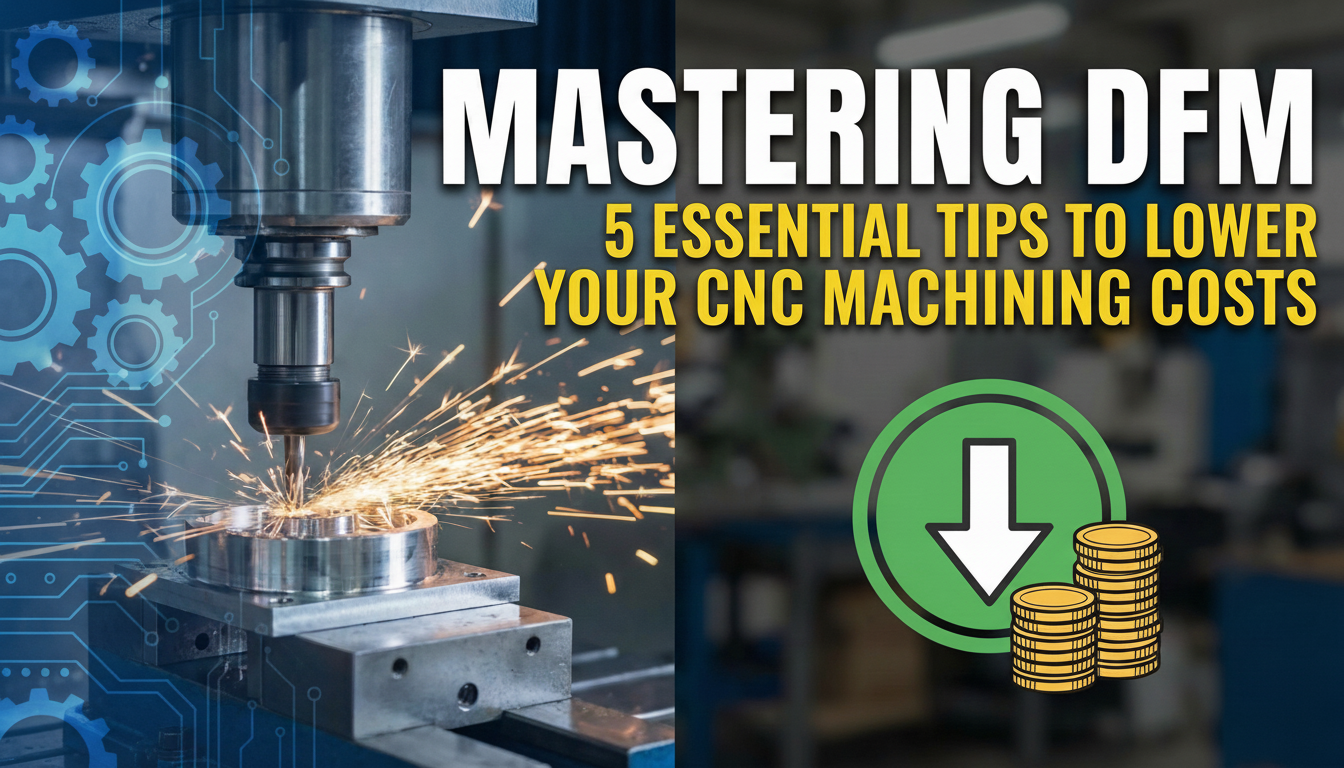
Optimize your CAD designs for CNC machining with these 5 essential tips. Save costs and time with Accura CNC Supply.
Design for Savings: 5 Ways to Optimize Your CAD Files for CNC Machining
In the world of precision manufacturing, the difference between a cost-effective project and an over-budget one often starts long before a single chip is cut. At Accura CNC Supply, we pride ourselves on delivering high-tolerance components using our advanced fleet of HAAS and Mazak machinery. However, we often see designs that—while beautiful on a screen—include features that drive up manufacturing time and costs unnecessarily.
If you are looking to streamline your next production run or prototype, here are five essential "Design for Manufacturing" (DFM) tips to optimize your parts for CNC machining.
1. Avoid Sharp Internal Corners
Standard CNC milling tools (end mills) are cylindrical. This means they cannot perfectly square off an internal vertical corner. To create a perfectly sharp corner, a secondary process like Wire EDM is required.
While Accura CNC Supply offers expert Wire EDM services for when those corners are functional necessities (like in tool and die work), adding a radius to your internal corners allows us to use high-speed milling.
Pro Tip: Make your corner radius slightly larger than the radius of the cutting tool (e.g., if using a 1/4" tool, design a 0.130" radius) to reduce tool stress.
2. Standardize Your Hole Sizes
Custom-sized holes require custom tooling or specialized boring operations, both of which add time to your quote. By designing holes that match standard drill bit sizes (fractional or metric), you allow us to utilize our existing tool library on machines like the HAAS VF-4 more efficiently.
Avoid: Deep, narrow holes. Any hole deeper than 10x its diameter becomes significantly more difficult to drill accurately and increases the risk of tool breakage.
3. Be Realistic with Tolerances
It is tempting to label every dimension on a drawing with a tight tolerance of ±.0005. However, extreme precision requires slower feed rates, more frequent tool inspections, and specialized gauging.
The Strategy: Only apply tight tolerances to critical fitment areas (like bearing seats or mating surfaces). For non-critical surfaces, a standard tolerance of ±.005 is much more economical and faster to produce.
4. Limit Pocket Depth
Deep pockets require long cutting tools, which are more prone to "chatter" (vibration) and breakage. This forces the machinist to reduce the cutting speed, which increases your lead time.
The Rule of Thumb: Ideally, a pocket's depth should not exceed 4x its width. If you must go deeper, ensure the internal corner radii are increased to accommodate a thicker, more stable tool.
5. Minimize Part Setups (Orientation)
Every time a machinist has to manually rotate or flip a part in the vise, the cost goes up. Each new setup requires time for alignment and increases the potential for stacking errors.
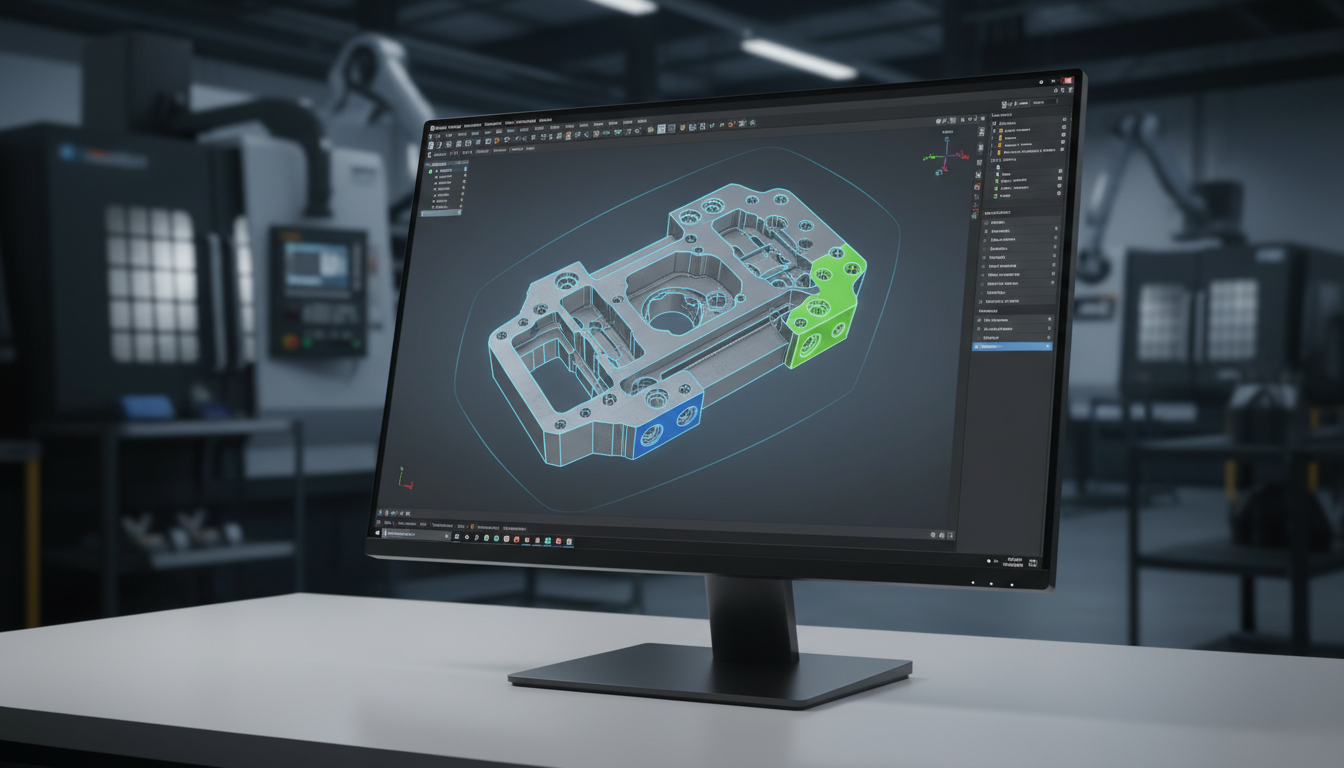
The Goal: Design your part so that as many features as possible can be reached from a single orientation. If a part requires 6-axis movement but can be redesigned to be machined from two sides, you will see a significant drop in the per-unit price.
Partnering with Accura CNC Supply
At Accura CNC Supply, we don't just "cut metal." We act as an extension of your engineering team. Whether you are utilizing our HAAS VM-3 for high-speed mold work or our Mazak lathes for precision turning, our goal is to deliver the highest quality part at the most efficient price point.
Have a design you're ready to bring to life? Contact Accura CNC Supply today for a design review and a competitive quote on your next CNC machining or tool and die project.
Get Started Today
Browse our equipment or contact us for a free consultation. Email [email protected] — we respond within 24 hours.
Ready to get started?
Browse our equipment inventory or get in touch with our team for expert advice on your next project.