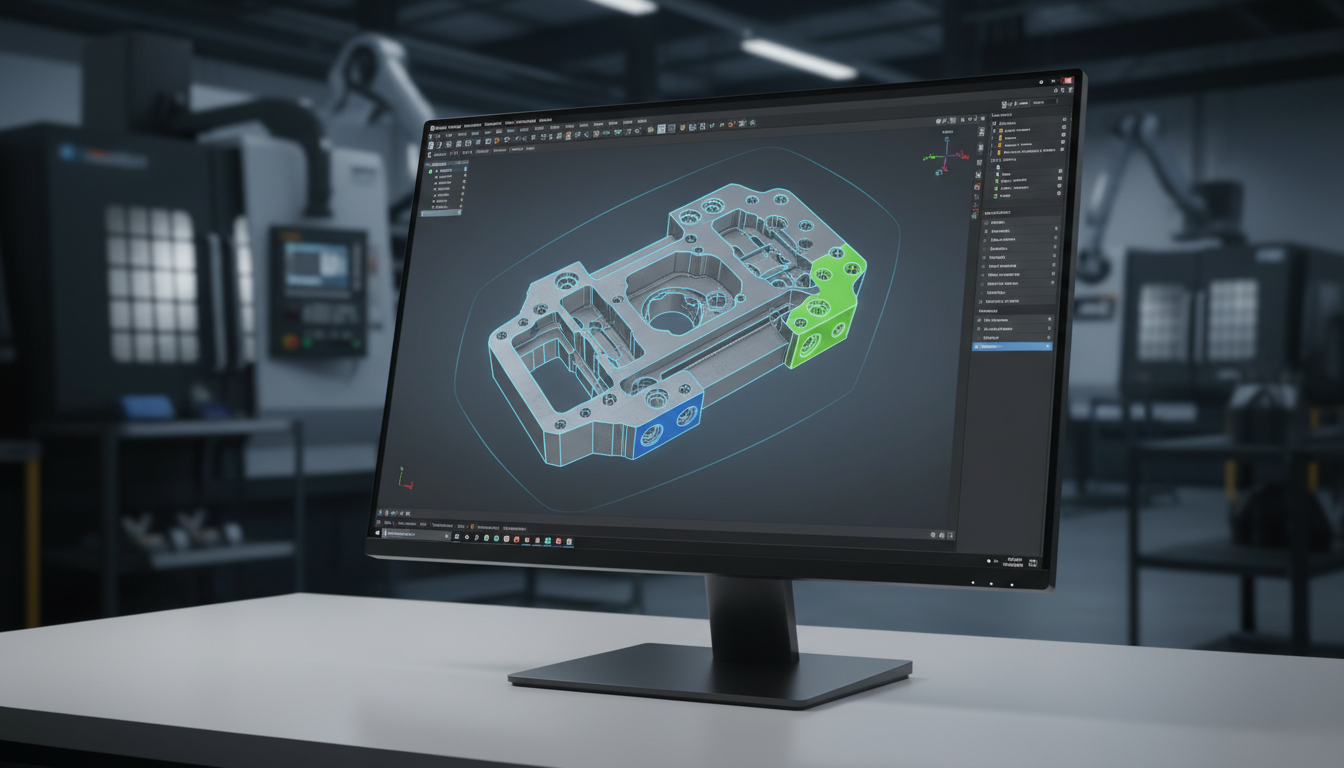
Learn how thermal growth affects precision and discover strategies to manage dimensional drift in CNC machines.
The Hidden Enemy of Precision: Managing Thermal Growth in Your CNC Workflow
In the world of precision machining, consistency is king. You set your offsets, verify your first article, and start the production run. But three hours later, you notice your tolerances are drifting. The culprit isn’t your programming or your tooling—it’s heat.
At Accura CNC Supply, we know that high-performance machinery is only as good as the environment it operates in. Understanding and mitigating thermal growth is the difference between a high-yield day and a bin full of scrap.
What is Thermal Growth?
Thermal growth is the physical expansion of machine components (spindles, ball screws, and the machine frame) as they generate heat during operation. Even a slight increase in temperature can cause a spindle to grow by several microns, leading to depth inconsistencies or diameter shifts that can push parts out of tolerance.
4 Strategies to Combat Thermal Drift
1. Implement a Standardized Warm-Up RoutineMany shops make the mistake of jumping straight into a heavy cut. A spindle warm-up cycle (running the spindle at incremental RPMs for 15–20 minutes) allows the machine components to reach a "steady state" temperature. When the machine reaches thermal equilibrium before the first tool touches the part, the dimensions stay much more consistent throughout the shift.
2. Monitor Your Coolant StrategyCoolant isn’t just for chip evacuation and lubricity; it is your primary heat management tool.
- Consistency is Key: If your coolant tank is sitting at 65°F and your shop floor is 80°F, the "thermal shock" can actually cause dimensional instability.
- Flow Rate: Ensure your nozzles are aimed precisely at the tool-workpiece interface to whisk heat away before it can soak into the machine casting.
Your CNC machine is essentially a large mass of metal that reacts to its surroundings. If your shop experiences large temperature swings—such as opening a bay door in the winter or direct sunlight hitting a machine through a window—the machine frame will twist and expand unevenly.
- Pro Tip: Keep your machines away from direct HVAC vents and out of direct sunlight to maintain a stable "ambient" baseline.
Modern CNC controllers often have thermal compensation algorithms. However, the most effective way to manage drift is through in-process probing. By using a probe to check a reference surface or a tool setter to check for spindle growth every few parts, the controller can automatically update offsets to compensate for the physical expansion of the machine.
Why It Matters for Your Bottom Line
Ignoring thermal stability leads to "chasing the dimensions"—a frustrating cycle where operators constantly tweak offsets to keep up with a moving target. By stabilizing your thermal environment and routines, you reduce setup time, eliminate scrap, and extend the life of your spindle bearings.
How Accura CNC Supply Can Help
Precision requires the right tools and the right knowledge. Whether you are looking for high-stability tooling, advanced coolant delivery systems, or advice on upgrading your machine’s probing capabilities, our team is here to ensure your shop stays within tolerance, every time.
Get Started Today
Browse our equipment or contact us for a free consultation. Email [email protected] — we respond within 24 hours.
Ready to get started?
Browse our equipment inventory or get in touch with our team for expert advice on your next project.