Learn how CCD camera systems enable precision contour cutting on laser cutters and CNC machines. Understand registration marks, vision technology, and how to choose CCD-equipped equipment.
What Is a CCD Camera System?
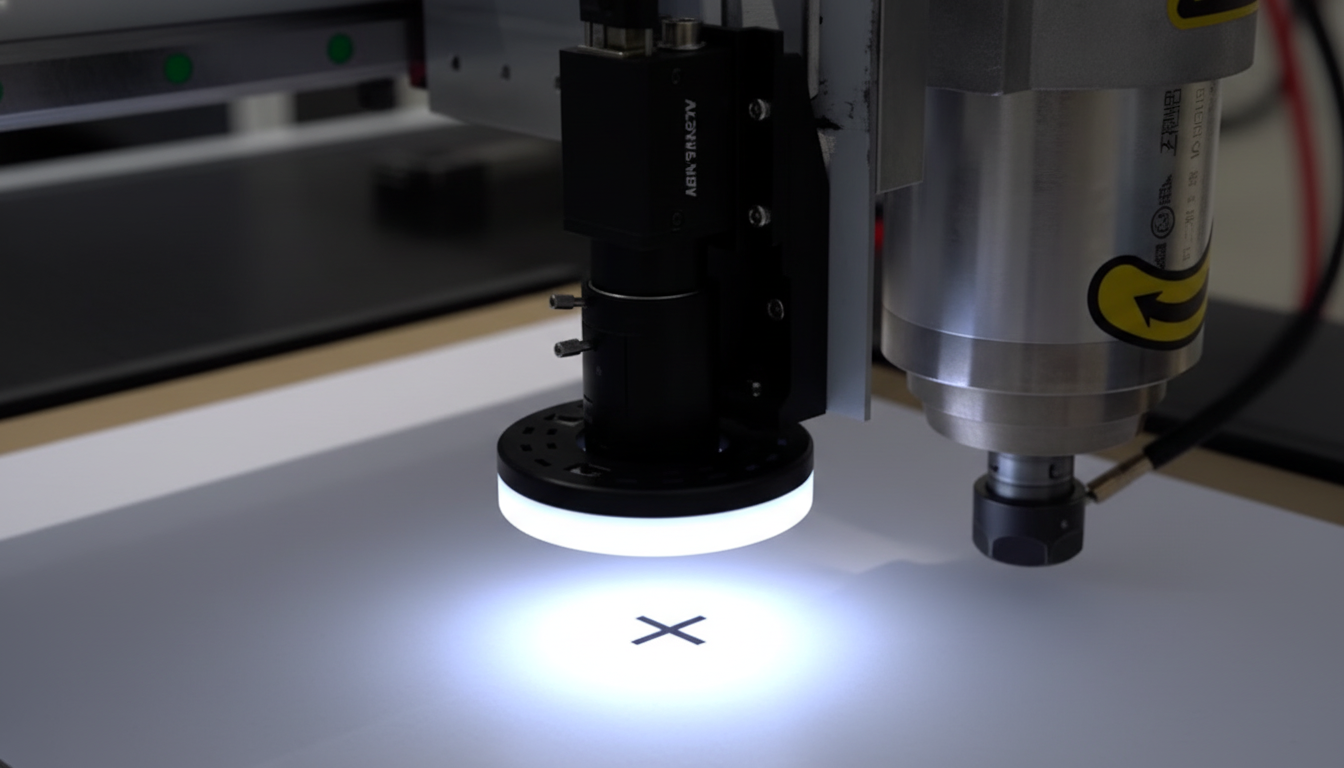
A CCD (Charge-Coupled Device) camera system is vision technology integrated into laser cutters, digital die cutters, and CNC machines. These cameras detect printed registration marks on materials, allowing the machine to automatically align cut paths with printed graphics—achieving precise contour cuts without manual positioning.
This technology transforms how businesses handle print-to-cut production. Instead of manually aligning each sheet or struggling with registration errors, the machine "sees" where the print is and adjusts the cutting path accordingly.
How CCD Cameras Work with Cutting Machines
The Basic Process
- Print phase: Graphics are printed along with registration marks (small targets the camera can recognize)
- Material loading: The printed material is placed on the cutting bed
- Camera detection: The CCD camera scans the material and locates the registration marks
- Coordinate mapping: The machine calculates the exact position, rotation, and scale of the printed content
- Cut path adjustment: The cutting software automatically transforms the cut file to match the print's actual position
- Precision cutting: The machine cuts along the adjusted path, following the print perfectly
Camera Mounting Positions
CCD cameras are typically mounted in one of two configurations:
- Gantry-mounted: Camera moves with the cutting head, scanning marks as needed. More flexible but adds scanning time.
- Fixed overhead: Stationary camera captures the entire bed. Faster detection but may have resolution limits on large beds.
Image Processing
Modern CCD systems use sophisticated image processing to:
- Detect marks under varying lighting conditions
- Recognize marks on different colored backgrounds
- Calculate rotation and scaling corrections
- Handle partial marks or marks obscured by debris
Types of Registration Marks
Different CCD systems recognize different mark types. Common registration marks include:
Circular Fiducial Marks
The most common type. Simple filled circles that are easy for cameras to detect. Usually 5-10mm in diameter with high contrast against the background.
Cross-Hair Registration Marks
Traditional printing registration marks with intersecting lines. Some systems use the center intersection point for alignment.
Corner Registration
L-shaped marks placed at corners of the print area. Useful for rectangular substrates where edge alignment matters.
Square/Diamond Marks
Alternative shapes used by some systems, particularly for detecting rotation.
Custom Marks
Some advanced systems allow custom mark definitions for specific applications or to work around design constraints.
Applications for CCD-Equipped Machines
Labels and Stickers
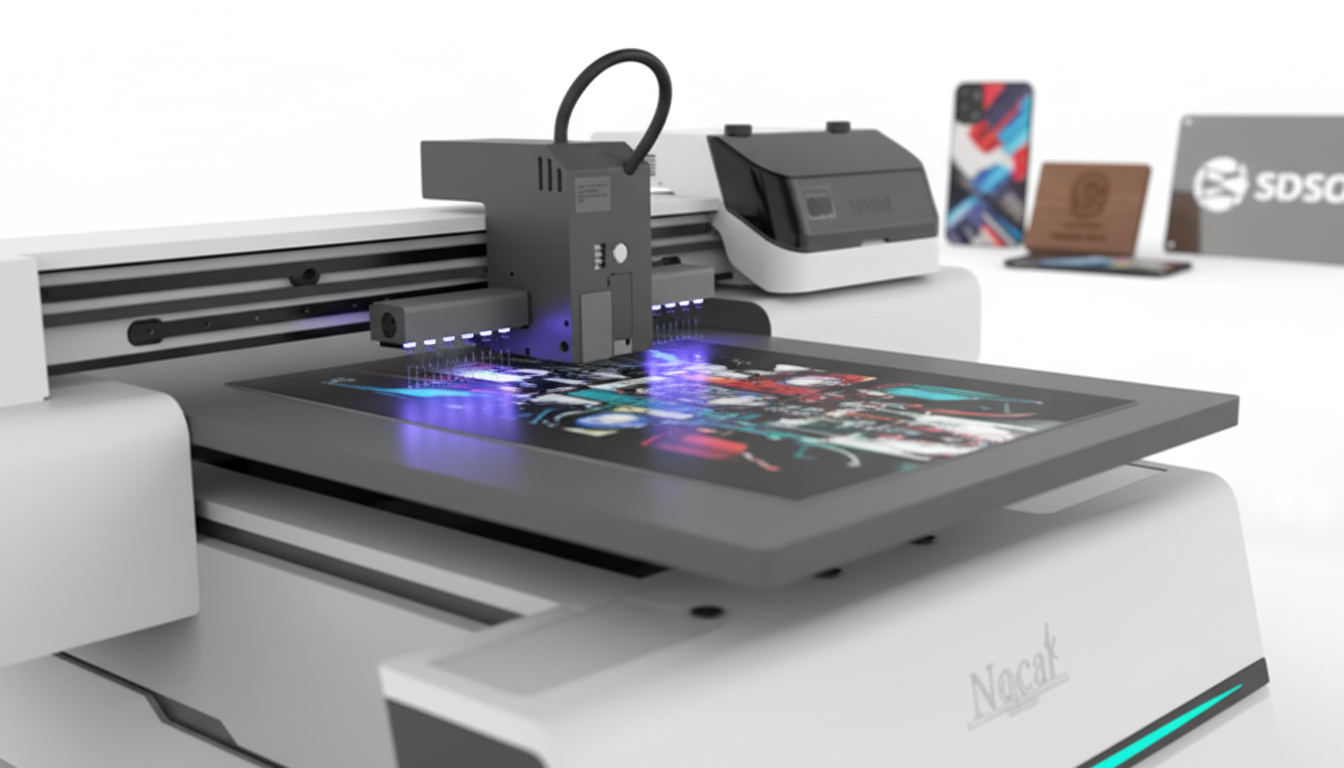
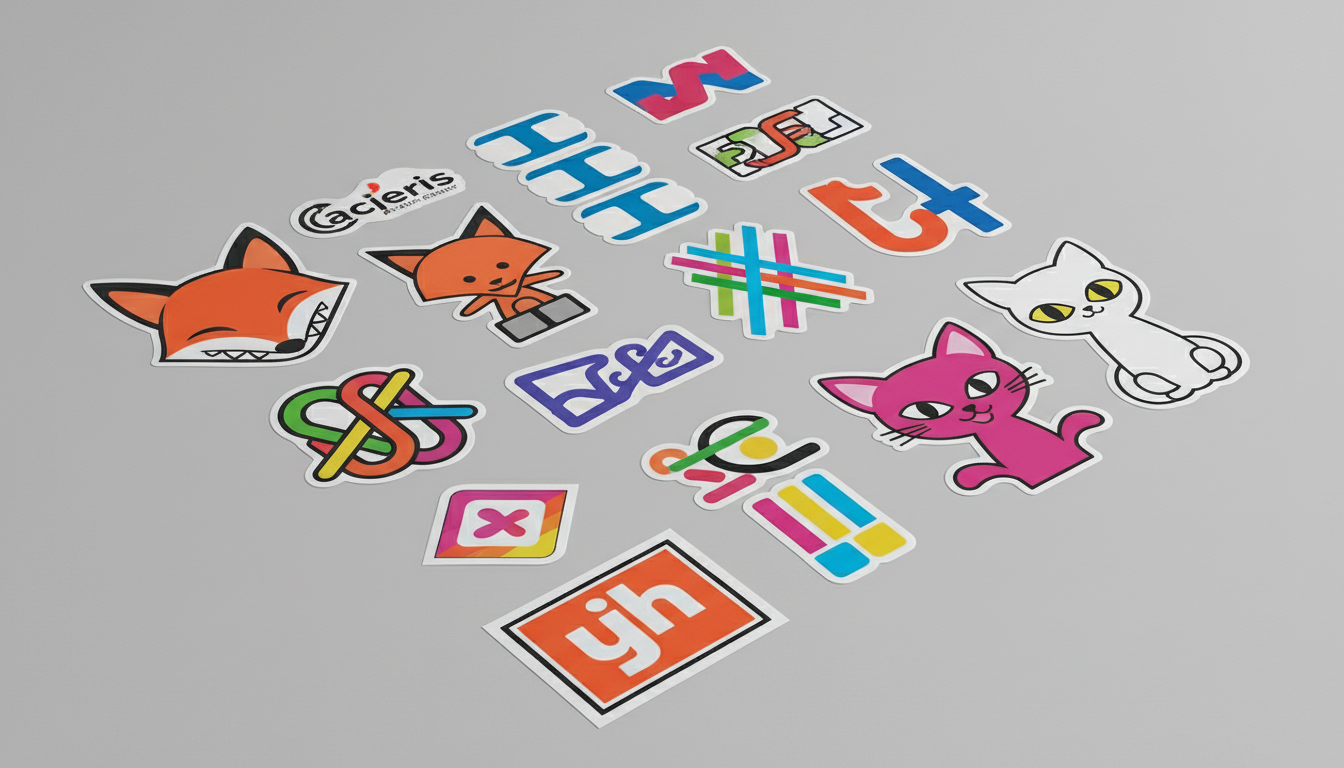
Die-cut labels and stickers are a primary application. The UV printer prints the graphics and registration marks on vinyl or paper, then the laser or digital cutter follows the contour precisely—even for complex shapes.
Apparel and Textiles
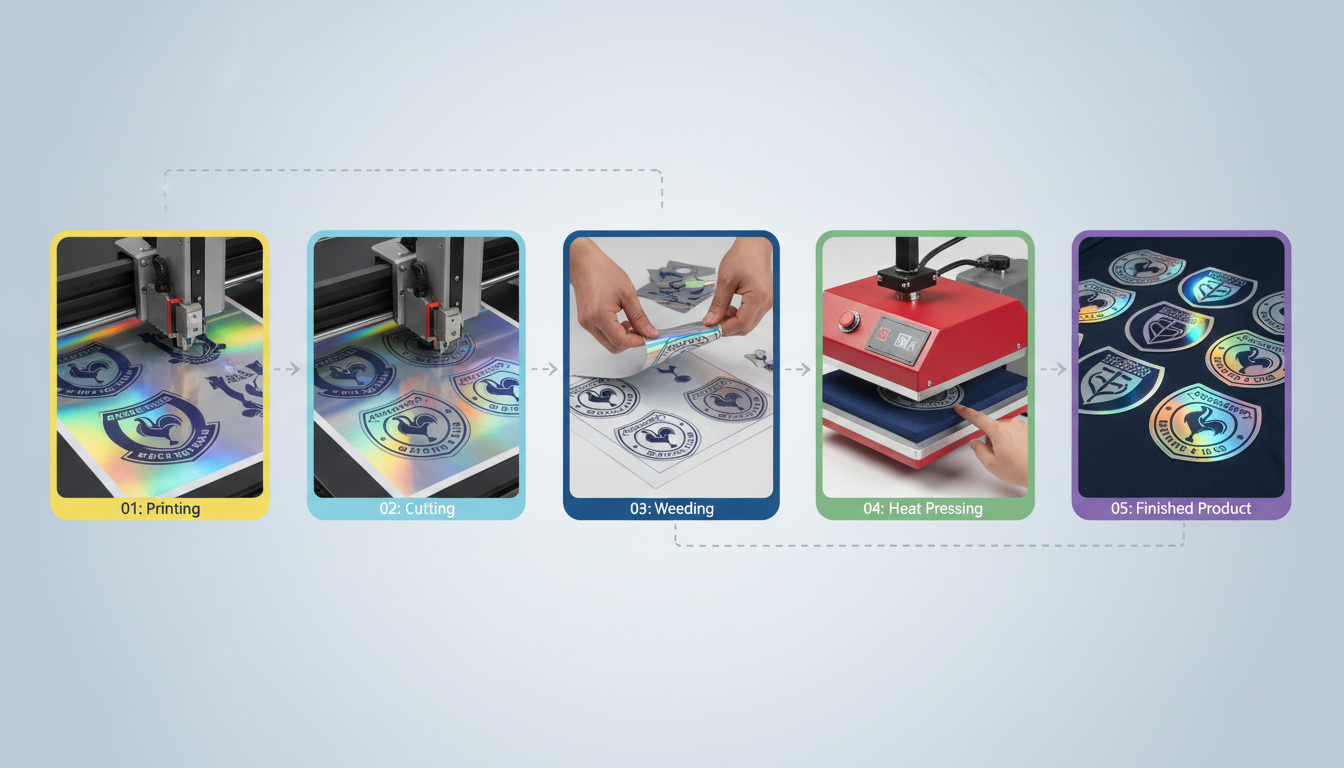
Heat transfer prints, sublimated fabric, and direct-to-garment printed textiles all benefit from CCD-guided cutting. The camera compensates for fabric stretch and print distortion.
Packaging and Displays
Point-of-purchase displays, box prototypes, and packaging often combine printed graphics with structural cutting. CCD systems ensure graphics align with fold lines and cut edges.
Signage
Contour-cut vinyl graphics, printed acrylic signs, and dimensional lettering require precise alignment between print and cut paths.
Floor Graphics
Large format printed floor graphics need contour cuts with safe zones. CCD cameras handle the registration across large sheets.
Key Features to Look For
When evaluating CCD camera systems, consider these specifications:
Mark Recognition Accuracy
Look for systems that specify accuracy in millimeters. Quality systems achieve ±0.1mm accuracy or better. This directly affects how closely your cuts follow the printed contours.
Automatic Scaling and Rotation
Print media can stretch or shift during printing. Good CCD systems automatically compensate for:
- Scale changes (media shrinkage or stretch)
- Rotation (media loaded at a slight angle)
- Skew (non-uniform distortion)
Multi-Mark vs. Single-Mark Systems
- Single-mark: Detects one registration point. Simple but can't compensate for rotation or scaling.
- Two-mark: Compensates for rotation and X-axis scaling.
- Three-mark: Full transformation including X and Y scaling.
- Four-mark: Maximum accuracy with full distortion correction.
Detection Speed
How quickly can the camera locate marks? For production environments, detection speed affects throughput. Some systems scan all marks simultaneously; others move to each mark sequentially.
Material Compatibility
Can the system detect marks on reflective materials? Transparent substrates? Dark-colored materials? Verify compatibility with your typical materials.
Software Integration
How does the CCD system integrate with your design and cutting software? Look for:
- Native support in popular design software
- Automatic mark generation
- Job queue management
- Barcode-initiated job loading
Benefits of Vision-Assisted Cutting
Eliminates Manual Alignment
No more eyeballing registration or using jigs. The camera handles alignment automatically, reducing operator skill requirements and setup time.
Reduces Material Waste
Misregistration means scrapped materials. CCD systems virtually eliminate registration errors, directly reducing waste costs.
Enables Complex Contours
Intricate cut paths that would be impossible to align manually become practical with camera guidance.
Increases Throughput
Faster setup times and fewer reprints mean more jobs completed per shift.
Handles Print Variability
Different printers, media batches, and environmental conditions create variability. CCD systems adapt to each print individually.
Choosing CCD-Equipped Equipment
When selecting a laser cutter or digital cutter with CCD capabilities, consider your production requirements:
Questions to Ask
- What mark types does the system recognize?
- What's the specified registration accuracy?
- How does it handle different material colors and finishes?
- What's the detection speed for typical jobs?
- Does it integrate with your existing design software?
- What training is provided?
Integration Considerations
A CCD system is only as good as its integration with your workflow. Consider:
- File format compatibility with your print RIP
- Automatic mark generation capabilities
- Network connectivity for production management
- Support for variable data and batch processing
Contact our team to discuss CCD-equipped cutting solutions for your specific applications. We offer machines with integrated vision systems plus the training to maximize your production efficiency.
Browse our equipment selection to see laser and cutting systems with CCD camera capabilities.
Ready to get started?
Browse our equipment inventory or get in touch with our team for expert advice on your next project.