A strategic comparison of in-house CNC machining vs. outsourcing custom parts to China. Learn which approach fits your business needs.
What is Custom CNC Machining?
Custom CNC machining produces parts designed specifically for your application—not off-the-shelf components. This includes:
- One-off prototypes and samples
- Low-volume production runs
- Parts with unique geometries or specifications
- Modifications to existing designs
- Replacement parts for obsolete equipment
The question businesses face: Do you outsource this work or invest in equipment to do it yourself?
The Outsourcing-to-China Option
How It Works
- Send CAD files and specifications to supplier
- Receive quotation (usually 1-3 days)
- Approve quote and place order
- Supplier produces parts (1-3 weeks)
- Parts shipped to you (2-4 weeks sea, 5-7 days air)
Advantages
- No capital investment: Pay per part, not for equipment
- Broad capability: Access to equipment you don't own
- Scalability: Order 10 parts or 10,000
- No overhead: No staff, facility, or maintenance costs
Challenges
- Lead time: 4-8 weeks minimum from order to delivery
- Communication: Technical discussions across language/timezone
- Quality control: Verification at distance is difficult
- Flexibility: Changes require new quote cycles
- IP concerns: Your designs in someone else's facility
The In-House Equipment Option
What's Required
- CNC equipment appropriate for your parts
- Facility space with adequate power and ventilation
- Staff with training and time to operate
- Tooling, materials, and consumables
- Ongoing maintenance and support
Advantages
- Speed: Parts in hours or days, not weeks
- Iteration: Rapid design changes and prototyping
- Quality control: Inspect every part as it's made
- Flexibility: Immediate response to urgent needs
- IP security: Designs stay in-house
- Cost structure: Fixed costs, not per-part
Challenges
- Capital requirement: Upfront investment in equipment
- Learning curve: Staff need training and experience
- Capability limits: Limited to your equipment's range
- Utilization: Equipment costs money even when not running
Hybrid Approaches
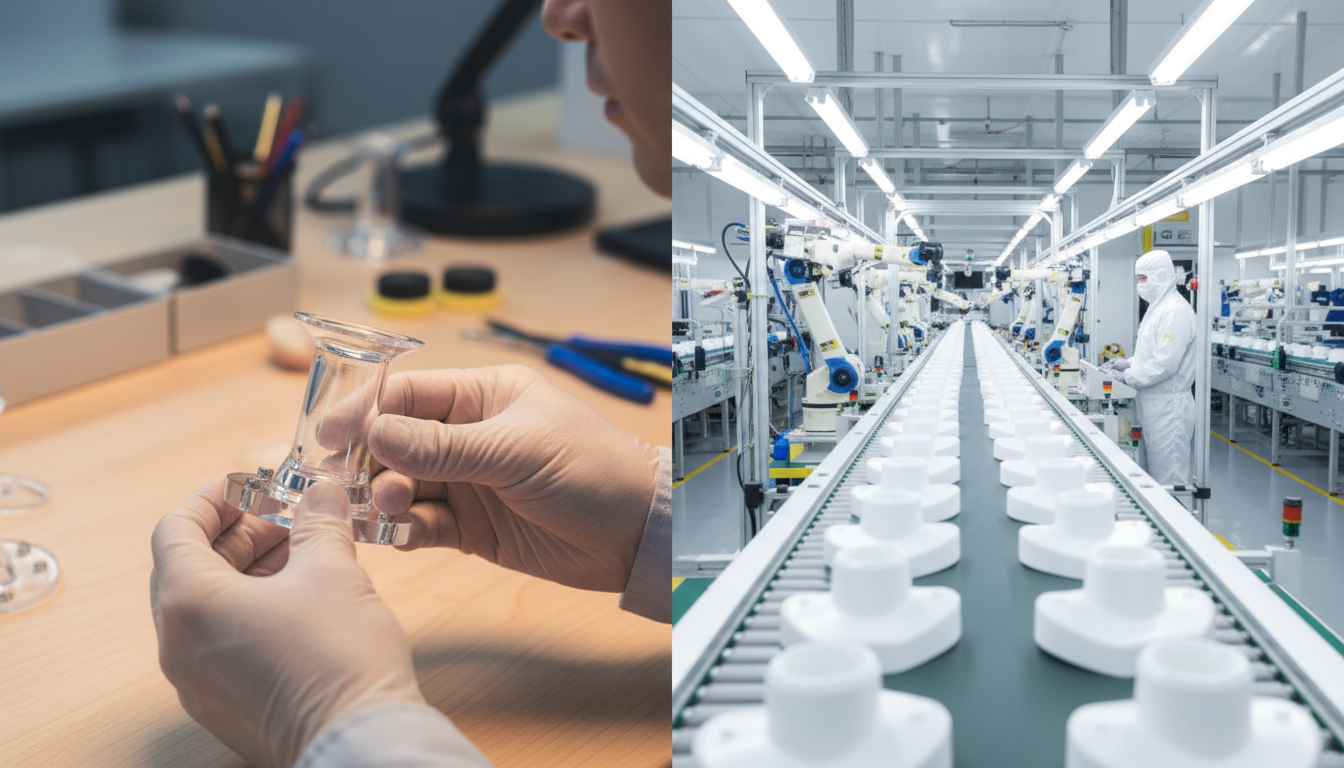
Most successful manufacturers don't choose one or the other—they combine both strategically:
In-House Priority Work
- Urgent requirements and rush orders
- Prototypes and design iterations
- High-frequency, low-complexity parts
- Proprietary or sensitive designs
- Work that's core to your competitive advantage
Outsource for Specialty Work
- Materials or processes requiring equipment you don't have
- Large volume runs exceeding your capacity
- One-time projects not worth tooling up for
- Overflow during peak demand periods
ROI Calculation Framework
Use this framework to evaluate whether equipment investment makes sense:
Calculate Current Annual Outsourcing Cost
Include:
- Per-part costs from suppliers
- Shipping and duties
- Quality inspection costs
- Cost of delays and expedited shipping
- Administrative time for ordering
Estimate In-House Costs
Include:
- Equipment purchase (amortize over useful life)
- Installation and setup
- Training
- Tooling and consumables
- Operator time
- Maintenance and repairs
- Facility costs (space, power)
Compare Total Costs
Calculate break-even point:
- How many parts until equipment pays for itself?
- How many months/years is that at your current volume?
- What happens if volume increases or decreases?
Factor in Strategic Value
Some benefits don't show up in cost calculations:
- Value of fast turnaround to customers
- New business from offering services
- Product development acceleration
- Competitive differentiation
Making the Transition to In-House
If your analysis favors equipment investment:
Start Smart
- Begin with versatile equipment that handles your most common needs
- Don't over-specify—buy for actual requirements, not theoretical possibilities
- Factor in support and training, not just equipment cost
Build Skills Progressively
- Start with simpler jobs while developing expertise
- Move complex work in-house as capability grows
- Document processes for consistency
Maintain Outsourcing Relationships
- Keep suppliers for overflow and specialty work
- Don't burn bridges—you may need backup capacity
- Compare in-house costs to outsourcing to verify value
Key Questions to Answer
Before making your decision:
- What percentage of your parts could you realistically make in-house?
- How much are you currently spending on those parts?
- What equipment would you need, and what does it cost?
- Do you have staff who could operate equipment (or could learn)?
- Do you have adequate space and power?
- How critical is fast turnaround to your business?
- Are there IP or quality control concerns with outsourcing?
Get Help Deciding
The right answer depends on your specific situation—volume, part types, facility, staff, and strategic priorities all factor in.
Contact our team to discuss your custom machining needs. We can help you analyze the costs and benefits of different approaches and identify equipment that fits your requirements if in-house production makes sense.
Browse available equipment to understand capabilities and price points across different machine categories.
Ready to get started?
Browse our equipment inventory or get in touch with our team for expert advice on your next project.