Everything you need to know about UV flatbed printer ink - types, costs, storage, handling, and troubleshooting common ink issues for optimal print quality.
Understanding UV Flatbed Printer Ink
UV-curable ink is the lifeblood of your UV flatbed printer. Understanding ink types, proper handling, and cost factors helps you achieve consistent quality while managing operating expenses effectively.
How UV Ink Works
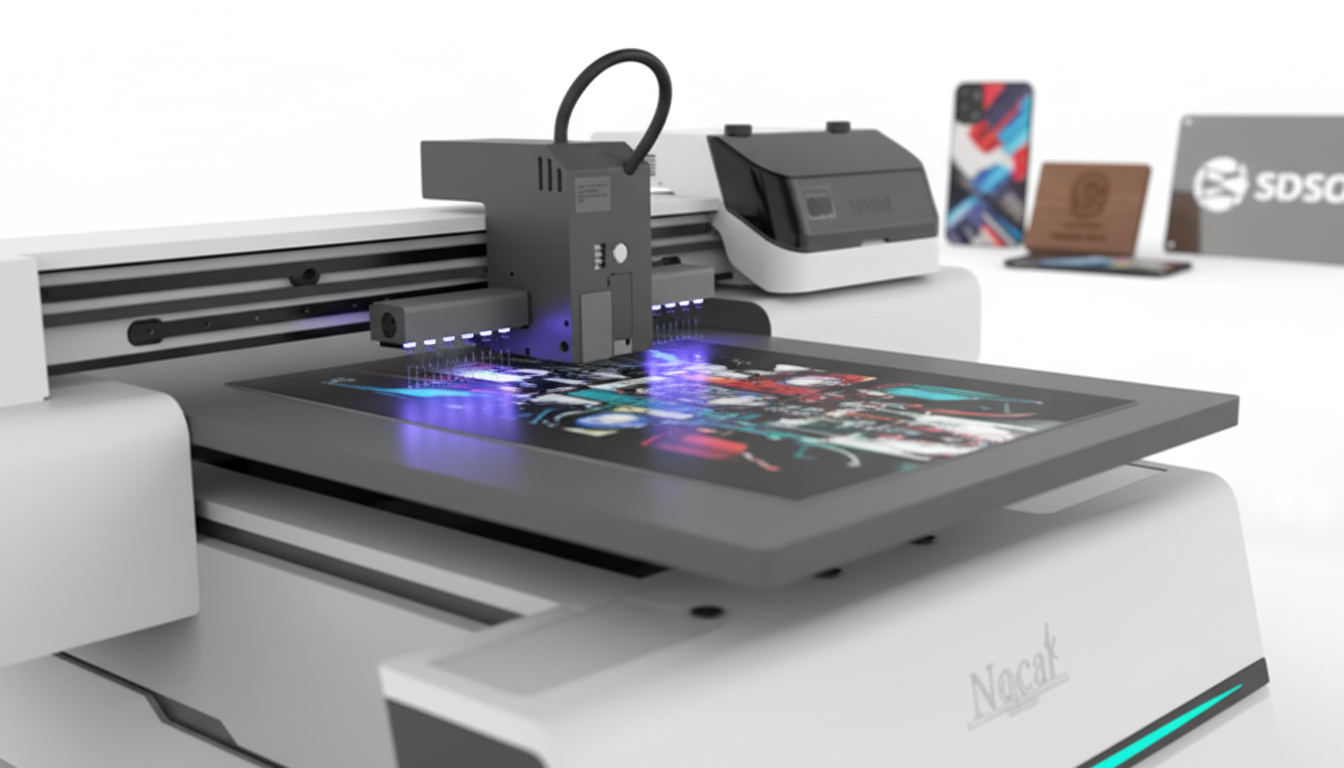
UV-curable inks contain special compounds called photoinitiators that react when exposed to ultraviolet light:
The Curing Process
- Liquid State: Ink is jetted onto the substrate as a liquid
- UV Exposure: UV light hits the ink immediately after printing
- Polymerization: Photoinitiators trigger rapid chemical cross-linking
- Solid State: Ink hardens into a durable, scratch-resistant finish within milliseconds
Types of UV Flatbed Ink
Rigid UV Ink
Designed for hard, inflexible substrates:
- Best adhesion on acrylic, glass, metal, wood
- Excellent scratch and chemical resistance
- May crack if substrate flexes
- Ideal for signage, displays, industrial applications
Flexible UV Ink
Formulated for materials that bend:
- Maintains integrity when substrate flexes
- Required for banners, vinyl, leather
- Better for rolled or curved applications
Hybrid UV Ink
Combines rigid and flexible properties:
- Versatile for mixed production environments
- Good balance of durability and flexibility
- Simplifies inventory management
Ink Colors and Specialty Options
Standard CMYK
The foundation of color printing:
- Cyan: Blue tones
- Magenta: Red/pink tones
- Yellow: Yellow tones
- Black (Key): Density and shadows
White Ink
Essential for many UV flatbed applications:
- Creates opacity on dark substrates
- Enables printing on clear materials
- Contains titanium dioxide particles that settle
- Requires recirculation systems to prevent clogging
Varnish/Clear Coat
- Adds gloss or matte finish options
- Creates texture effects (raised printing)
- Provides additional protection layer
UV Ink Costs
Price Ranges
- CMYK inks: $80-150 per liter
- White ink: $120-200 per liter
- Varnish: $100-180 per liter
- Primer: $80-140 per liter
Reducing Ink Costs
- Optimize color profiles for efficient ink use
- Use appropriate coverage for viewing distance
- Minimize white ink where possible
- Proper maintenance reduces waste
Ink Storage and Handling
Storage Requirements
- Temperature: Store at 59-77°F (15-25°C)
- Avoid extremes: Never freeze or overheat
- Light protection: Keep in original containers away from UV exposure
- Shelf life: Typically 6-12 months unopened
Handling Best Practices
- Shake ink cartridges before installation (especially white)
- Allow refrigerated ink to reach room temperature
- Use within recommended time after opening
- Use gloves to avoid skin contact
Troubleshooting Common Ink Issues
Clogged Nozzles
- Cause: Ink drying in heads, particle contamination
- Prevention: Regular purging, proper shutdown procedures
- Solution: Head cleaning cycles, soaking if severe
White Ink Settling
- Cause: Titanium dioxide is heavier than carrier fluid
- Prevention: Recirculating systems, regular printing
- Solution: Agitate ink, run white purges
Poor Adhesion
- Cause: Wrong ink type, contaminated surface, insufficient curing
- Prevention: Match ink to substrate, clean materials, verify UV output
- Solution: Use primer, increase curing energy, test alternatives
Maintaining Ink Quality
Daily Practices
- Run nozzle checks at shift start
- Perform light purges before production
- Keep print head area clean
Weekly Maintenance
- Deep cleaning cycles
- Check ink levels and expiration dates
- Inspect and clean wiper blades
Get Expert Support
Proper ink management is crucial for UV flatbed printer performance. Contact our team for guidance on ink selection, troubleshooting, or to source quality UV inks for your machine.
Ready to get started?
Browse our equipment inventory or get in touch with our team for expert advice on your next project.