Learn everything about UV flatbed printers - how they work, what materials they print on, common applications, and why they are transforming the printing industry.
What is a UV Flatbed Printer?
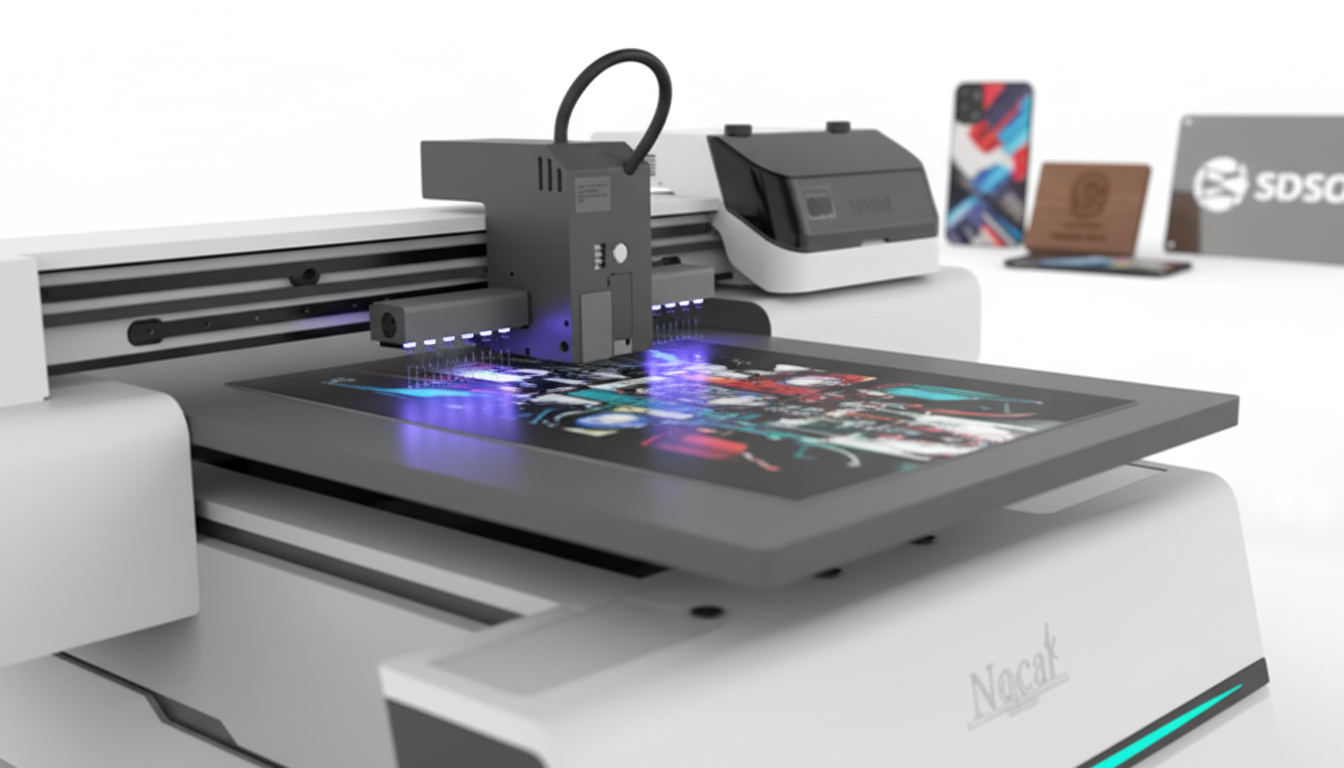
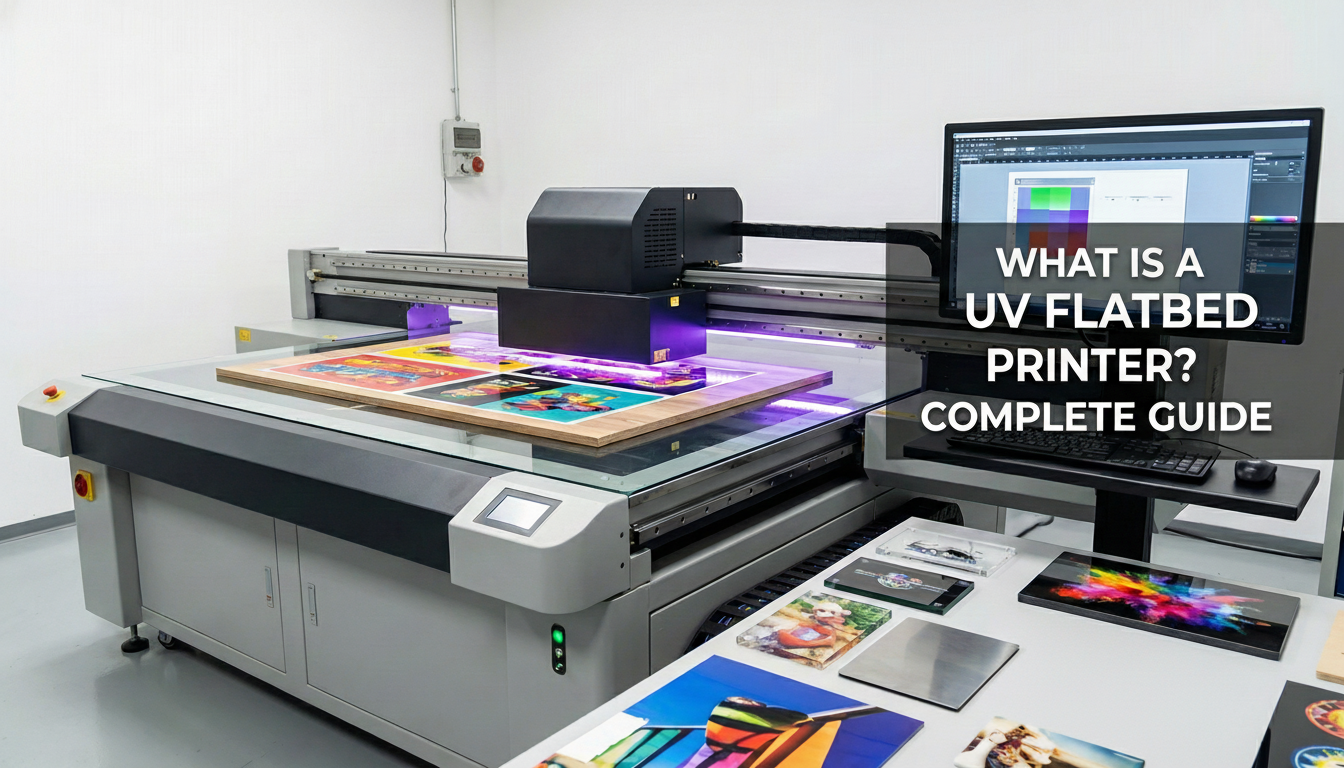
A UV flatbed printer is a large-format digital printing machine that uses ultraviolet light to instantly cure (dry) ink as it's printed onto virtually any flat surface. Unlike traditional printers that rely on heat or air drying, UV flatbed printers use special UV-curable inks that harden immediately when exposed to UV LED or mercury lamp light sources.
The "flatbed" design means materials lay flat on a stationary table while the print head moves across the surface. This allows printing on rigid materials like wood, metal, glass, acrylic, and foam board that can't bend around rollers in traditional roll-fed printers.
How Does UV Flatbed Printing Work?
The UV printing process combines precision inkjet technology with instant UV curing:
The Printing Process
- Material Placement: The substrate is positioned on the flatbed table, often using vacuum suction or registration pins for precise alignment
- Ink Jetting: Piezoelectric print heads spray tiny droplets of UV-curable ink onto the surface
- Instant Curing: UV lamps following immediately behind the print heads expose the ink to ultraviolet light
- Polymerization: The UV light triggers a photochemical reaction that instantly hardens the ink into a durable finish
UV Curing Technology
Modern UV flatbed printers use one of two curing technologies:
- UV LED: Energy-efficient, produces less heat, longer lamp life, instant on/off capability
- Mercury Arc Lamps: Traditional technology, higher intensity, requires warm-up time, generates more heat
What Materials Can UV Flatbed Printers Print On?
One of the greatest advantages of UV flatbed printing is material versatility. These machines can print directly on:
Rigid Materials
- Acrylic and plexiglass
- Wood and MDF
- Metal sheets (aluminum, steel, brass)
- Glass and ceramic tiles
- Foam board and PVC
- Corrugated plastic (Coroplast)
Flexible Materials
- Vinyl and banner materials
- Leather and synthetic leather
- Canvas and textiles
- Paper and cardstock
Specialty Substrates
- Phone cases and promotional products
- Golf balls and sports equipment
- Packaging prototypes
- Architectural models
Common Applications for UV Flatbed Printers
UV flatbed printing serves diverse industries and applications:
Signage and Display
Point-of-purchase displays, directional signage, trade show graphics, and backlit signs benefit from UV printing's vibrant colors and durability.
Industrial Printing
Control panels, nameplates, instrument faces, and machine interfaces require the precision and durability UV flatbed printing delivers.
Promotional Products
Phone cases, awards, plaques, and custom gifts can be printed directly without transfers or labels.
Packaging Prototypes
Create realistic packaging mockups for client presentations and design approval before committing to full production runs.
Interior Design
Custom wall panels, decorative tiles, furniture surfaces, and architectural elements can be personalized with UV printing.
Advantages of UV Flatbed Printing
Instant Drying
No waiting for ink to dry means immediate handling, finishing, and shipping. This dramatically improves production efficiency.
Exceptional Durability
UV-cured inks are scratch-resistant, waterproof, and UV-stable. Prints maintain vibrancy even with outdoor exposure.
Material Versatility
Print on virtually anything flat up to several inches thick, eliminating the need for separate printing processes for different substrates.
Environmental Benefits
UV inks contain no solvents and produce minimal VOCs (volatile organic compounds), making them more environmentally friendly than solvent-based alternatives.
White Ink Capability
Most UV flatbed printers offer white ink, enabling printing on dark or transparent materials with vibrant, opaque results.
Key Specifications to Consider
When evaluating UV flatbed printers, focus on these specifications:
- Print Area: Common sizes range from small format (24" x 36") to large format (10' x 16' and beyond)
- Print Height: Maximum material thickness, typically 2" to 6" for most machines
- Resolution: Measured in DPI (dots per inch), typically 600-1440 DPI for quality output
- Print Speed: Varies significantly based on quality settings and coverage
- Ink Channels: CMYK plus white, varnish, and sometimes primer options
Is a UV Flatbed Printer Right for You?
UV flatbed printing makes sense if you need to:
- Print on rigid materials directly
- Handle diverse substrate types
- Produce durable, outdoor-rated graphics
- Offer quick turnaround with no drying time
- Create prototypes or short runs cost-effectively
Ready to explore UV flatbed printing for your business? Browse our selection of UV flatbed printers or contact our team to discuss your specific printing needs.
Ready to get started?
Browse our equipment inventory or get in touch with our team for expert advice on your next project.